5 REASONS WHY BUSINESS EXIST

Businesses were known to engaged in series of economic activities with the aim of changing the owners’ lifestyles and transforming their customers’ life. These activities which usually take place within a certain location, a region, across the border were embarked upon in order to: create employment, create wealth, contribute to gross domestic product, raise the standard of living and achieve profitability where directed towards providing the best service as to be required by their customers. In this article, we will outline the reasons for a business existence and the value it bestowed on its owners.

CREATING EMPLOYMENT
The business have created an avenue for the unemployed to be absorbed, trained and gained experience. This trend seems to be on an increasing side as about 90 percent of businesses had offered jobs to more than 50 percent of the world population. Apart from engaging the services of skilled and unskilled persons, the business also provides a medium for a person to take advantage of opportunities that exist to set up the business of their choice in manufacturing, arts and craft, information technology, marketing and other menial jobs.

CREATING WEALTH
Various activities as engaged by business entities had resulted in accumulating cash, construction of buildings, acquiring lands, possessing intangible and generating perceive incomes that have improved the lives of the business owners for the better. For a business to create wealth entails; the incomes realized from other activities can be invested in other ventures therefore fulfilling it’s need for growth and expansion.

RAISING STANDARD OF LIVING
The business has enable the customer to have access to food, clothes, shelter, social safety, comforts and luxuries which he is accustomed to enjoy. Due to the active participation in economic activities, the business was able to contribute to the total amount of goods and services produced in an economy thus; invariably increasing national income and improving the standard of living.

CONTRIBUTING TO GROSS DOMESTIC PRODUCT
The business has tremendously contributes towards producing market and non-market products. This can be attributed to activities of the formal small and medium scale enterprises which contributes up to 40 percent of gross domestic product in emerging economies and 72 percent of the gross domestic product in the Origin for Economic Cooperation and Development (OECD) countries and corporations which account for more than billions of dollars in revenue.

PROFITABILITY
Profit is the life blood of business that is essential for it’s survival. Profit has creates opportunities for a business to pay dividend to shareholders, expand it’s operations, acquire new assets, acquire other businesses, embarked on product and market development and uncovering new productive methods through research and development.

Business has outrightly transformed lives by providing jobs, creating wealth and contributing substantial share of gross domestic product. This can attest to the fact that about 50 percent of the world population where engaged in series of productive activities which creates an avenue for customers to obtain the necessities of life and avails the business owners the opportunity of reaping the gains from their investment.

Hero Motors, Yamaha form JV to produce e-cycle drive motors

Source: Economic Times, 28 October 2021 Hero Motor ( HMC ) , the parent company of Hero Cycles is entering into a joint venture partnership with Japanese two wheeler major ,Yamaha to make electric motors for e bicycles for the global market. Yamaha is understood to be taking a minority stake initially and will eventually […]

Hero Motors, Yamaha form JV to produce e-cycle drive motors

Why measuring returns is just as important as taking stock of sales

Delamore Gracia's avatarDelamore Gracia - Blog

What returns data really says about Marketing The key to preventing skewed figures is to ensure you collect returns data within your Google Analytics account too, as this gives marketing teams visibility of genuine performance. More importantly, it allows you to optimise advertising spend towards retained revenue and avoid paying twice on sales which will [?]

The post Why measuring returns is just as important as taking stock of sales appeared first on Builtvisible.

from Marketing https://builtvisible.com/measuring-returns-data-for-marketing-impact/

View original post

Grand design: Ruark Audio unveils limited artisan edition R5 music system 

Steve May's avatarThe Luxe Review

British audio specialist Ruark Audio has taken the wraps off a new iteration of its popular R5 music system, the R5 MiE, the first of a new design-led collection.

The company’s Made in England (MiE) project will see it collaborate with some of the UK’s most celebrated craftspeople, to offer a premium level of finish to its sound system designs.

The MiE initiative will spotlight bespoke components, hand built using traditional techniques. Adopting an artisan approach to manufacture, each model will reportedly use only the finest FSC-approved timbers, veneers and materials.

The various elements that comprise the cabinet of the R5 MiE have been painstakingly made in a Suffolk workshop, and hand-assembled at Ruark’s Southend on Sea HQ.

A slatted wooden grille is the central design element of this Limited Edition R5. Handcrafted from multiple layers of walnut bonded to a black substrate, the tolerances on this need…

View original post 210 more words

Apple upgrades AirPods: here’s what you need to know about its 3rd gen earbuds

Apple has unveiled a third generation of AirPods, with an all-new contoured design, extended battery life and support for Spatial Audio Dolby Atmos Dynamic Head Tracking.  In terms of performance, these 3rd gen AirPods are much closer to AirPods Pro and AirPods Max. With the same computational audio, and a novel acoustic system , they […]

Apple upgrades AirPods: here’s what you need to know about its 3rd gen earbuds

SALES AS A PERFORMANCE INDICATOR

In the course of offering Products a business will give all it takes to outgrown competition. This is made possible by producing the exceptional products or using state of the art facilities. This implied that to satisfy the customers a business needs to evaluate if its sales have grown or decline and identify the factors that are responsible for such. This among others will enable a business have focus and know where it is heading to.


UNDERSTANDING SALES
Sales are amount of goods and services offered or rendered by a business inorder to satisfy customers needs. Sales is one of the most important variable which contribute to business growth and value creation.


BASIC SELLING OBLIGATIONS
• Finding People Searching for Products/Services: To improve sales activities, a business needs to dedicate time and resources towards attracting customers. Locating Prospective buyers may require a business to dedicate considerable time in generating leads by engaging in activities via developing ads to reach new prospects, sending direct mails, participating in trade shows, attending networking events, joining forums involving the target market and using social media forums.
• Changing Possibilities into Customers: Upon locating Prospective buyers the next task is to convert prospects into first time customers and subsequently making them repeat customers. To consolidate its market position a business needs to transform its customers to client people; to whom it may give premium treatment. Having converted prospects into repeat customers, a business should solidify its business-customer relationship by signing them into programs that may be beneficial to the business and thereafter making them advocates.
• Retaining Customer Delight: Satisfaction is a person’s feeling of contentment as a result of consuming a product or benefiting from a service. In following up to know the extend a customer have been treated, a business may initiate different methods to ensure proper things are put in placed so that factors that shape satisfaction can be understood and necessary changes affecting operations can be made. By having a highly satisfied customer also indicates that the customer stays loyal to a company’s product, talks favorable about the company and its products, pays little or no attention to competing brands and becomes less sensitive to the company’s price offers.
• Forecasting Income: Sales is forecasted by breaking down projected sales figures into sales territories and customer groups. The figures obtained from sales forecast are usually used for setting up of budget for sales force operations, sales promotion budgets and allocating the projected sales figures over the market area being served. Some interesting facts about forecasting sales is that; sales forecast aid a business in financial planning by; projecting cashflow, scheduling production runs, timing purchases, controlling inventories and establishing cost standards for accounting control.


BENCHMARK FOR SALES LEVEL
• Breakeven Sales Level: At breakeven sales level the business sales level will cover fixed cost without any thing left as profit.
• Target Point Sales Level: At target point sales level the business sales level will cover fixed cost and what remains will be the profit.
• Target Return on Sales Level: At target return on sales level the business sales level will cover fixed cost and what remains will be the profit. To determine the return on sales of a business the amount of profit will be divided by sales.
• Shut Down Sales Level: At shut down sales level the business will cover its fixed cost but will have no amount of profit left. The shut down position also indicate that; if sales is above the shut down level a business may make profit or loss but the business may likely cover its overhead cost. In another situation being below the shut down level may indicate how a business will experience cash drain.


MOTIVATING SALESMEN
• Quota System: A business may establish quotas on sales volume, number of calls and number of new accounts.
• Sales Contests: A business may run sales Contests by offering cash or non-cash prices. Such contest should be organize in such a way that it will stimulate weaker salesmen becoming winners.
• Conferences and Conventions: salesmen looking forward to sharpen their skills may attend conferences and conventions out of their daily schedules for the purpose of eliciting useful information on: products, sales techniques, management view points and expectations.
• Communication from Management: In order to inspire the sales team a formal communication may be written by the management transmitting specific and practical suggestions.
• Training and Development: Newly employed salesmen need to be train before given any responsibility. By Training the newly employed salesmen, they should be impacted with sound knowledge about products and customers. While the experience salesmen should be retrain to handle new products or new customers. A good training program should be able to inculcates: enthusiasm, positive attitude towards selling and sound ethical standards.


Every business journey starts from idea generation and ends at maturity stage. With dedicated efforts towards customer satisfaction a business gives priority in increasing its sales and profitability. For a business to attain a superior position in the market and outweighs competition, it is imperative to execute sales tasks, figure out sales levels and motivates the sales team.

Coach the Mindset If You Expect to Change the Behavior

If you are like most people, helping others change doesn’t always work. In fact, it rarely works. Change is difficult. Habits are hard to break. Yet people do change. People quit smoking and stop drinking. Kids learn to do things right, at least eventually. Employees develop new skills. People learn self-control. What is the difference between the situations that turn out well and those that don’t?

Coach the Mindset If You Expect to Change the Behavior

AMG Author Interview – Dan Gingiss, The Experience Maker

Delamore Gracia's avatarDelamore Gracia - Blog

the experience makerWant to improve your customer experience (or CX)? Read this author interviews with Dan Gingiss on “The Experience Maker” to attract and retain customers longer and profitably.

The post AMG Author Interview – Dan Gingiss, <em>The Experience Maker</em> appeared first on Heidi Cohen.

from Marketing https://heidicohen.com/books/the-experience-maker/

View original post

Content Marketing World Authors Will Make You Smarter

Delamore Gracia's avatarDelamore Gracia - Blog

Andy Crestodina - Content ChemistryWant to be a content marketing smarty? Check out these Content Marketing World authors. Since books are the ultimate long form content marketing, they know how to create the useful information you need.

The post Content Marketing World Authors Will Make You Smarter appeared first on Heidi Cohen.

from Marketing https://heidicohen.com/content-marketing-world-authors/

View original post

The crucial role clients play in Digital PR and link building

Delamore Gracia's avatarDelamore Gracia - Blog

Begin the relationship on solid foundations To keep the honeymoon phase in full swing there?s two key things to iron out. The first is about offering-up all necessary information we need to make effective decisions, and the second helps to uncover any potential knowledge gaps in-house on Digital PR, link building and our processes. A [?]

The post The crucial role clients play in Digital PR and link building appeared first on Builtvisible.

from Marketing https://builtvisible.com/the-crucial-role-clients-play-in-digital-pr-and-link-building/

View original post

Art of Discount: Distribution Discount

The boss said, in business there are two things not to be missed: one is the customer, the other is the profit. Customers, in this article, are distribution intermediaries – the bridge that brings products from manufacturers to consumers. The success of a business depends on many distribution channels. For one thing, the discount budget for these intermediaries […]

Art of Discount: Distribution Discount

The new movies and TV to stream in September 2021

‘The Russell Howard Hour’, ‘Gunpowder Milkshake’ and ‘Code 404’ are heading to Sky Cinema and NOW during September 2021. (Sky/Reiner Bajo/StudioCanal) Yahoo Entertainment’s editors are committed to independently selecting wonderful products at great prices for you. We may receive a share from purchases made via links on this page. Pricing and availability are subject […]

The new movies and TV to stream in September 2021

Trick Play images on Direct Publisher – Short How to

In the “New Roku Certification Criteria” email, one of the items is: Trick play thumbnails. Channels must display thumbnails during trickplay for VOD content that is 15 minutes or longer. Trick play thumbnails may be generated using either Roku’s proprietary BIF file format or the new DASH and HLS standards for generating thumbnail tiles, which were announced as part […]

Trick Play images on Direct Publisher – Short How to

Variables to Consider Before Setting a Price

Decisions related to fixing prices are usually taken in the course of developing new products, embarking on market development, or bidding for contracts. To create value for a product the marketing department or the product line manager may decide on the best way to fixed price after taken into consideration these variables:

Selecting a Pricing Objective: The first issue a business should consider before fixing its price is the objective of setting a price. Such objective may be spelled out when a business wants to survive against challenges like; overcapacity, intense competition or changing consumers’ taste. By estimating demands and costs associated to alternative prices a business may decide to fixed price with an aim of; maximizing it’s market share, maximized its profitability, generate positive cash flow, and a high rate of return on investment. A business may also set its price objective with an aim of becoming a product-quality leader so that its product can be perceived as luxurious or qualitative product.

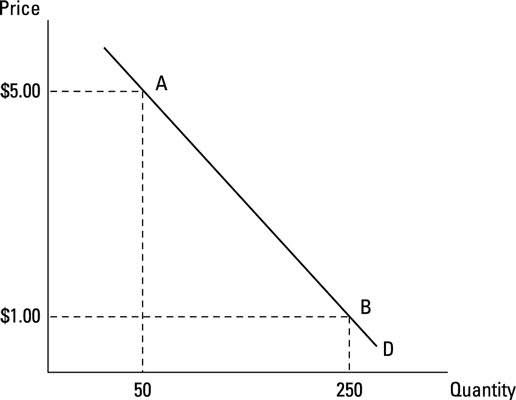
Demand: The demand for new products as well as existing ones will determine how and why prices are fixed. Demand as relates to pricing comes to mind by taking into consideration; the aggregate demand, buyer price acceptance, and price elasticity of demand.

The aggregate demand indicates the total number of individual buyers who might be willing to accept the price for a product. To make a price acceptable, a business needs to find out at what price the buyers are willing to pay and then work things out to see if raw materials, labour cost, and any other cost will permit a profitable production.
To fixed price a business needs to know how demand for its product would respond towards a change in price as; price elasticity of demand may depends on the magnitude and direction of the contemplated price change.

Apart from above identified demand factors a business may also needs to measure its demand curve by adopting either of these methods: ✓Survey: Exploring the number of units consumers will buy at propose price.
✓Price experiment: Charging different prices for the same product in similar territories to see how it may affect sales.
✓Statistical analysis: Obtaining past prices, quantities sold, and other factors to reveal their relationships.

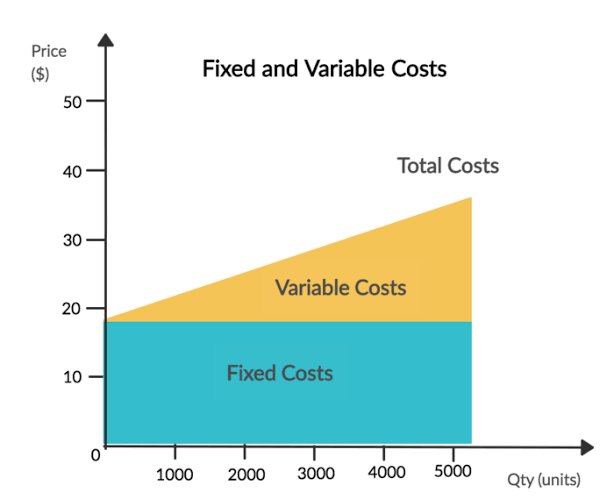
Estimating cost: Production cost set the level at which price of goods and services should not fall below. In a situation where a product’s price is lower than its cost of production, the volume of products produced may be on the high side. In relating costs to price there is need for costs to be classify either as fixed or variable costs. Fixed costs are costs which do not vary with the level of Production. Variable costs are costs which relates with the level production.
To fixed price, a business needs to charge price that will cover the total cost of Production and know how such cost may vary with different levels of Production; as failure to measure cost correctly may lead to misallocating marketing efforts, thus not measuring profitability correctly.

• Competition: A competitor is any business which provides satisfaction to other business customer’s needs. Fixing a lower price can be interpreted by competitors as intension of a business to steal their market or wants the industry to reduce price to stimulate total demand. To fixed price above competition may require additional features to a product. The price of products can also be matched against competitors’ prices with the product features remain unchanged but focus will shift to product quality.
Information as regards to competition can be obtain by seeking opinions from existing customers as partains to competitors and their plans. The internet, print media, suppliers may also provide information about competition as competitors’ ads may revealed their intentions regarding their markets and products.

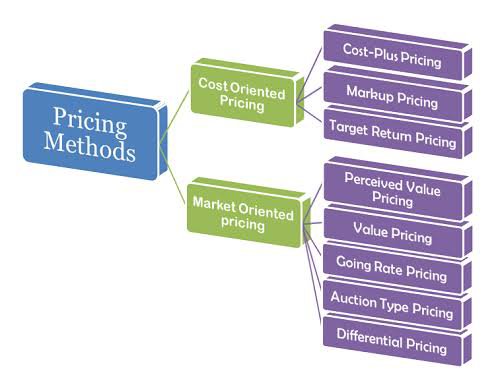
Selecting a Pricing Method: In fixing price there is need to adopt a pricing method. By Taking decision as regards to a recommended pricing method there is need to take into consideration the; floor price, competitor’s price, and ceiling price.

A business may also need to select a price method after examining either of the following pricing methods:
Markup pricing: Markup pricing involves adding together the cost of products and certain percentage as mark-up to determine the selling price.
Target-return pricing: Target-return pricing is determine by considering the amount invested in business activities and the return expected from the quantity of goods to be sold.
Perceived-value pricing: Adopting Perceived-value pricing will entails the price of a product will be set base on the product image a customer carries in mind and how much he is willing to pay for.
Value pricing: Value pricing is a customer-focused pricing model in which a business will based its price on how much the customer believes a product is worth.
Going-rate pricing: Going-rate pricing is adopted base on competitors’ prices. Going-rate pricing is quite popular in situations where; competitive response is uncertain or the going price will reflect the industry’s collective wisdom.
Auction-type pricing: Auction-type pricing is adopted when a product is offered for bids, bids taken, and afterwards sold to the highest bidder. The auction-type pricing is growing more popular especially with the growth of internet.
Differential pricing: Differential pricing involves charging different prices for the same type of product to different customers based on product form, payment terms, purchase and delivery time, and customer segment.

CONCLUSION

To make a product attractive and create value on the mind of a customer it is imperative for a business to look into the identified factors before setting a price. Taking decision on the best pricing option may requires a business to also look into its pricing policies and structure. It is however necessary to set a price tag that will reflects the value the customers are willing to pay.

How Nike Make a Breakthrough in the Athletic Footwear Market

Nike came into existence in 1962 as Blue Ribbon Sport with a focused of producing high-quality running shoes for athletes. Its founder, Philip Knight established Nik ite with the believed that high-tech running shoes could be manufactured at competitive prices if imported from abroad. Nike’s commitment to design innovative footwear for athletes help it build a cult following among U.S consumers.

Nike marketing philosophy is based on “pyramid of influence” where product and brand choices were influenced by the preferences and behavior of a small percentage of top athletes. Therefore, from start, its campaigns featured winning athletes as spokespeople. Nike’s first spokesperson was a runner, Steve Prefontaine who had an irrelevant attitude that marched the company’s spirit.


In 1985, Nike signed up then- rookie guard Michael Jordan as a spokesperson. Jordan was still an up-and-comer, but he personified superior performance. Nike’s bet paid off, where it’s Air Jordan line of basketball shoes flew off the shelves with revenues reaching over $100 million in the first year alone.


In 1988, Nike aired the first ads in its $20 million”Just Do It” ad campaign. The campaign which ultimately featured 12 TV spots in all, subtly challenged a generation of athletic enthusiasts to chase their goals; it was a natural manifestation of Nike’s attitude of self-empowerment through sports.


As Nike began expanding it’s operations to Europe, it discovered that it’s U.S style ads were seen there as being too aggressive. Nike realized it has to authenticate it’s brand in Europe the way it had in the United States. That meant building credibility and relevance in European sports, especially soccer. Nike became actively involved as a sponsor of youth leagues, local clubs, and national teams.


Authenticity also required that consumers see athletes using the product, especially athletes who won competition. Nike’s big break came in 1994, when the Brazilian team (the only national team for which Nike had any real sponsorship deal) won the World cup. That victory in the world’s most popular sport helped Nike succeed in other international markets like China, where it came to command 10% of the shoe market. By 2003 overseas revenues surpassed U.S. revenues for the first time and by 2006 international divisions generated nearly $7.3 billion in revenue, compared to $5.7 billion from the United States.


In addition to expanding overseas, Nike moved into new athletic footwear, apparel, and equipment product categories. These included the Nike Golf brand of footwear, apparel, and equipment which all endorsed by megastar Tiger Woods. In 2005, Nike introduced an urban-themed collection of retro footwear and apparel bearing the name of the original company, Blue Ribbon Sports. Blue Ribbon Sports designs which included: jeans, belts, sweaters, and woven shirts were sold at high-end retailers like Barney’s and Fred Segal.


Today, Nike dominates athletic footwear market. Swooshes abound on everything from wristwatches to golf clubs to swimming caps. As a result of its expansion across geographic markets and product categories, Nike is the top athletic apparel and footwear manufacturer in the world with corporate 2007 revenues of nearly $16 billion.


Sources: Justin Ewers and Tim Smart, “A Designer Swooshes In,” U.S. News & World Report, January 26, 2004, p. 12; “Corporate Media Executive of the Year,”Delaney Report, January 12, 2004, p.1; “10 Top Nontraditional Campaigns, Advertising Age, December 22, 2003, p. 24; Chris Zook and James Allen, “Growth Outside the Core,” Harvard Business Review 8 (December 2003): 66; Kotler Philip and Keller Kevin Lane, “Breakthrough Marketing,” Marketing Management, Pearson Educational International, 2009, p. 61

What is Your Core Competency

Lots of businesses disregard things that if given due consideration will enable them to achieve an unprecedented fate. This cannot be ignore that Industry and market leaders adopt various forms of policies and strategies which saw them providing world class goods and services.

The term competency is a special quality that makes a business withstands pressures of activities of its competitors. Terms like unique resources, core capabilities, invisible assets, embedded knowledge and skills are synonymous with business competencies. Core competencies provide access to variety of markets, contribute to perceived customers’ benefits, and difficult for rivals to imitate.
Prahaled and Hamel adopts the analogy of the tree in describing core competency by stressing that a diversified corporation is just like a large tree where its trunk and major branches are its core products. The smaller branches are the business units. Other parts of the tree like the leaves, flowers and the fruits are its end products, while the root system which provides nourishment, sustenance and stability can be view as its core competency.
For a business to identify its core competencies and maintain a leadership position there is need to keep track of its core competencies and competitors’ performance by looking for the unexpected successes and unexpected poor performance. The success may demonstrate market value as well as where a business enjoys a competitive advantage, while the non-success may indicates how the market is changing or the business competencies are weakening.

The idea of core competence seems to be a brilliant way to focus upon the strength of an organisation. If given the due attention and implementation may lead a business to have competitive advantage in the market place. This can relate to how:
• NEC builds its core competencies in computing, communications and components to support the production of laptop computers, television receivers, and hand held telephones to invent new markets, exploit emerging ones, delight customers with products they hadn’t even imagine.
• Honda for designing and building of small but powerful and highly reliable internal combustion engines which have given it a distinctive advantage in motor vehicle, motorcycle, lawn mower, and generator business.
• Cannon’s core competence in optics, imaging, and microprocessor controls have enable it to enter even a dominant market as seemingly diverse as copiers, laser printers, cameras, and image scanners.
• Amazon provides the largest selection of items online with superior IT systems and customer service.
• Nike for nurturing its superiority in shoe design and merchandising as its core competence.
• IKEA designs modern functional home furnishings at low prices offered in a unique retail experience.


For a business to progress and succeed in its environment it has to develop its competencies over a period of time and harness such into a fine art of competing with its rivals so that it can be able to possess a distinctive competency and possess an advantage in any situation.

Generating Business Ideas

On a good day, Steve was reminiscing about life and all of a sudden his mind “clicks” with an idea he thought might change his life forever. Such idea could be; a new invention, a best selling book, an application or a new form of entertainment. Unfortunately for Steve his chosen idea could not see the light of day, thus leaving tons of regrets or blames on on his mind. At times we faced obstacles while trying to get a business off the ground. Upon seeing one’s business success we often make statements like, “if only I could have thought of that”. Even though there are business ideas which are unrealistic in nature, some ideas have resulted in a business success story. This can relates to Phil Knight vision of producing high-tech shoes for runners which transforms Nike to a global corporation worth over billion of dollars.
Business ideas can evolved by observing the environment, discussing with colleagues from different backgrounds, listening to experts and reading from works of great and successful men. Other variables in which profitable business ideas can be generated are identified and discuss below:

Personal Experience: Business ideas based on personal experience can be drived from a person’s hobbies, interest or passion, inability to get the desired employment, talents or special skill, disability, frustration, bad experiences due to service failure or defective product.

Observation: Economic hardships in a country, business launched in another country, new trends in the business environment, innovation that could change an already known business model have been one of the major source for a business idea.

Business Experience: An idea can be source as a result of a business experience. The identified ideas may be as a result of a burning passion to solve a problem or right a wrong, knowledge of competitors, pricing or suppliers and superior understanding of a market through research.

Environmental Scanning: Environmental scanning is an idea generation technique where huge amount of information is gathered and analyse in order to identify potential business opportunities from emerging trends. To gather the necessary information, channels like; news magazines, commercials, trade publications, trade fairs and shows, family and friends, customers are highly involved in sourcing for business ideas.

Creativity: Creativity is the process where two or more ideas are combined in a new way which leads to innovative association among them. Creative thinking inspired a business, enable it to faced challenges and discovered innovative solutions that may create opportunities out of a problem. Having adopted a creative idea, a business can viewed issues from a new angle or approach. This will enable a business to adopt new ways in improving an existing product or service and optimised it’s activities.

Brainstorming: Brainstorming provides a medium for generated ideas to profer solution to a problem. During brainstorming session the participants will sit together for an unstructured discussion which may lead to series of ideas being generated. When brainstorming the following rules should be stick to:
✓ Criticism is not allowed by anyone (no negative comments from members).
✓ Freewheeling is encouraged (the wider the idea, the better).
✓ Quantity of ideas is desired (the greater the number of business ideas, the more likelihood the useful ideas emerging).
✓ Combination and improvements of business ideas are encouraged (business ideas of others can be used to produce other new business ideas).

Focus Group: Focus group involves the gathering of six to ten people who were carefully selected based on; demographics, psychographics or other considerations to discuss about topics of interest under the guidance of a moderator. Focus groups offer the means of obtaining indepth information through the dynamics of group interaction which allows insight on; feelings, attitudes and perceptions about the issue being discussed. The discussion commenced with self-introduction by participants. The moderator will then seek for answers on broad questions which may lead to more issues being discussed, thus encourages free and easy discussions so as to bring out the actual feelings of participants.

Market Research: Market research provides information which leads to Innovative business ideas. The information obtained from the research process will indicates the demand-supply gap prevailing in the market. While searching for business ideas, invaluable information can be gathered from industry and trade publications, the internet, observation, focus groups, surveys, behavioural data and experiments. The informations as obtained can be used to focus on players and drivers that may affect a business performance.

Reverse Brainstorming: Reverse brainstorming is similar to brainstorming session except that, it allows for criticism. Reverse brainstorming stimulates innovative thinking among participants. This can be done by identifying difficulties associated with a business idea; followed by a discussion on the best ways to overcome those difficulties.

Government: Government can be helpful in generating business ideas. The states and regions offers recommendations on; business hubs, product fairs and exhibitions. The bureau of statistics provides resources about new markets or raw materials. Files kept at the patent offices, government departments and technology development centres may contain information about a new product and business possibilities.

Business ideas have provided an avenue for a profitable venture to thrives. Upon the nature of obstacles which makes an idea being unrealistic; business entities like Coca Cola, Tesla, Ali Baba, Amazon, Apple, Facebook, Nike, Google and Microsoft have overcome threats to become global brands. This among other success stories have shown how generated ideas have provided a medium for a business to thrives and become a force to be reckoned with.

HANDLING A DIFFICULT CUSTOMER

A difficult customer is a person who has not been treated fairly due to poor service delivery. As a result of being disappoinmented the customer may feels short-changed or out-righty cheated out which may lead to complains or even threatens to take his business to a competitor. A business can win back a difficult customer by adopting the following process:

1. Letting the Customer Vent- When customers are upset they want to express their feelings and need the problem to be solved. This is not applicable for some service providers who regard customer’s venting as a waste of time because they want to move on and solve the problem. However, in trying to resolve a situation without first listening to the customers’ feelings will not help matters but by allowing your customer to vent his displeasure will makes him believe you are giving him a listening ear and solving the problem half way. Nothing heats up a customer with a problem faster than being told to calm down while they are venting. However, the best plan is to stay quiet and not make matters worse by interrupting the customer. Let the customer know that you are listening to him by:
• Nod your head frequently
• Say uhh-huh from time to time
• Maintain eye contact

2. Evading Negative Filters- The friction between a business and its customer is often worsened by how the business interpret the behaviors of the customer. Businesses that are found of tagging their difficult customers by names will dramatically changed how a customer is view, spoken, or listened to. If left unchecked, negative filters can get out of control and spread in an uncontrollable manner thus, creating a situation in which a positive communication with a customer will be extremely hard to managed. In handling a difficult customer there is need to switch to a service filter by asking a question like: “what does a customer need and how can it be provided ?” This question provides an alternative filter because as soon it was asked, a business focus changes. By changing a business attention, issue that needs to be addressed will be illuminated rather than a personal feelings about the customer’s behavior.

3. Expressing Empathy- Empathy works wonders in calming a difficult customer. By letting a customer knows that you understand why he is upset, you will build a bridge of rapport between you and them. In handling a difficult customer empathic phases should be used to convey and show the customer that his situation has been understood. The types of phrases that best express empathy towards a customer include statements like:
• I can see why you feel that way.
• I see what you mean.
• That must be very upsetting.
Some service providers feel uncomfortable to apologise to their customers because they see such as an admission of guilt. By saying “i am sorry” to a customer does not imply that you did anything wrong but it simply conveys that you are genuinely sorry that the customer had a bad experience. By using a warm and caring tone, you will enhance the meaning and effectiveness of empathy.

4. Active Problem Solving- Begin active problem solving by asking questions that Will clarify the cause of the customer’s problem. As you ask the customer questions, be sure to listen to everything he/she says and don’t jump to conclusions. Sometimes customers leave out critical information because they think it is unimportant or they just forget to mention it. Upset customers rarely present the fact of their story in a neat little package. In order to get a true picture of the customer’ situation, you may have to do a detective work to make sure that you understand everything the customer is telling you. Use the mirroring technique to summarize your understanding of what the customer says and then reflect it back to them. The customer then has the chance to verify or correct your understanding of the situation.

5. Mutually Agreeing on the Solution- After you gather all the facts, you need to work with your customer to come up with an acceptable resolution. If you haven’t discovered what will make him happy, ask. You may at this point find it necessary to take a brief time out from the customer so that you can do the behind the scenes work necessary to solve the problem. In this case, be sure that the customer knows exactly why you are asking him to wait and how long it will take for you to get back to him. Finally, when you both agree on how to resolve the problem explain the steps that you will take to implement the solution.

6. Follow Up- You can score big points on the service scoreboard by following up with your customers by a phone or an email to check that the solution works. If you contact the customer and discovered that he is not satisfied with the solution, continue to look for more workable solution.

Poor customer service is detrimental to any business. When customers do not feel valued, it makes it much easier for them to take their business elsewhere. Understanding the consequences of poor customer service is essential to delivering high-quality service.

10 Deadly Sins of Marketing

  1. The company is not sufficiently market focused and customer driven.
  2. The company does not fully understand its target customers.
  3. The company needs to better define and monituor its competitors.
  4. The company has not properly managed its relationships with its stakeholders.
  5. The company is not good at finding new opportunities.
  6. The company’s marketing plans and planning process are deficient.
  7. The company’s product and service policies need tightening.
  8. The company’s brand-building and communications skills are weak.
  9. The company is not well organized to carry on effective and efficient marketing.
  10. The company has not made maximum use of technology.

Source: Philip Kotler, Ten Deadly Marketing Sins.

Approaches of Starting a New Business

Businesses adopt different kinds of models towards entering a market or introducing a new product. Having adopted the most promising business idea there is need to know the best approach of making an entrance. Such approach adopted can be inform of new-new approach or new-old approach.

The new-new approach focus on developing a totally new product or service. Typical example of the new-new approach is, a new hand drill with a lifetime guarantee against defective performance.

For the new-old approach, most businesses do not start with a totally unique idea but rather an individual piggybacks on someone else idea by either improving a product or offering a service in an area where it is not currently available. Common case of the new-old approach are the restaurants and clothing stores that are set-up in a sprawling suburban areas.

THE PLACE OF COMPETITION IN THE MARKET PLACE

Businesses has continuously feel threaten by the activities of their competitors. Competition may be in form of activities of rivals who produce/provide similar goods and services. Or it can be due to activities of businesses that produce substitutional goods and services. Competition can constrain the achievements of business so also it can bring out the best of it’s performance. The presence of competition in the market place can also indicates that:

✓No business can make decision without reference to its competitive environment.

✓Even a monopoly must be concerned about potential entrants or effective substitutes.

✓Pricing must account for what the market will bear and the reaction of competitors.

✓The more competitors there are and the closer their product offering, the more sensitively will sales respond to a relative change in price.

✓Price wars may erupt from time to time but non-price competition using branding, other products and promotional tactics.

Conducting Market Assessment Using SWOT Analysis

In order to assess the key environmental forces that affect your brand and its overall health and ability to do business.
You can conduct a simple SWOT (Strengths, Weaknesses, Opportunities, Threats) analysis.

With your list of competitors you can begin to populate the following four quadrants by answering how well your brand stacks up against the competition as well as the key market dynamics across these vectors by answering the following questions in the four quadrants:

Strengths: What are the brand elements most helpful in driving growth?

Weaknesses: What are the brand elements that are setbacks to growth?

Opportunities: What market conditions can accelerate growth?

Threats: What market conditions can significantly limit growth?

With the quadrants populated, you can derive key insights to select a growth strategy that uses your strengths to tap into opportunities and consider any weaknesses and threats that might jeopardize your growth. This analysis will increase your chances of success in the market.